Own the Judgement
Why judgement matters more as AI accelerates execution, and how teams can use AI as a sous-chef while keeping the decisions that matter.
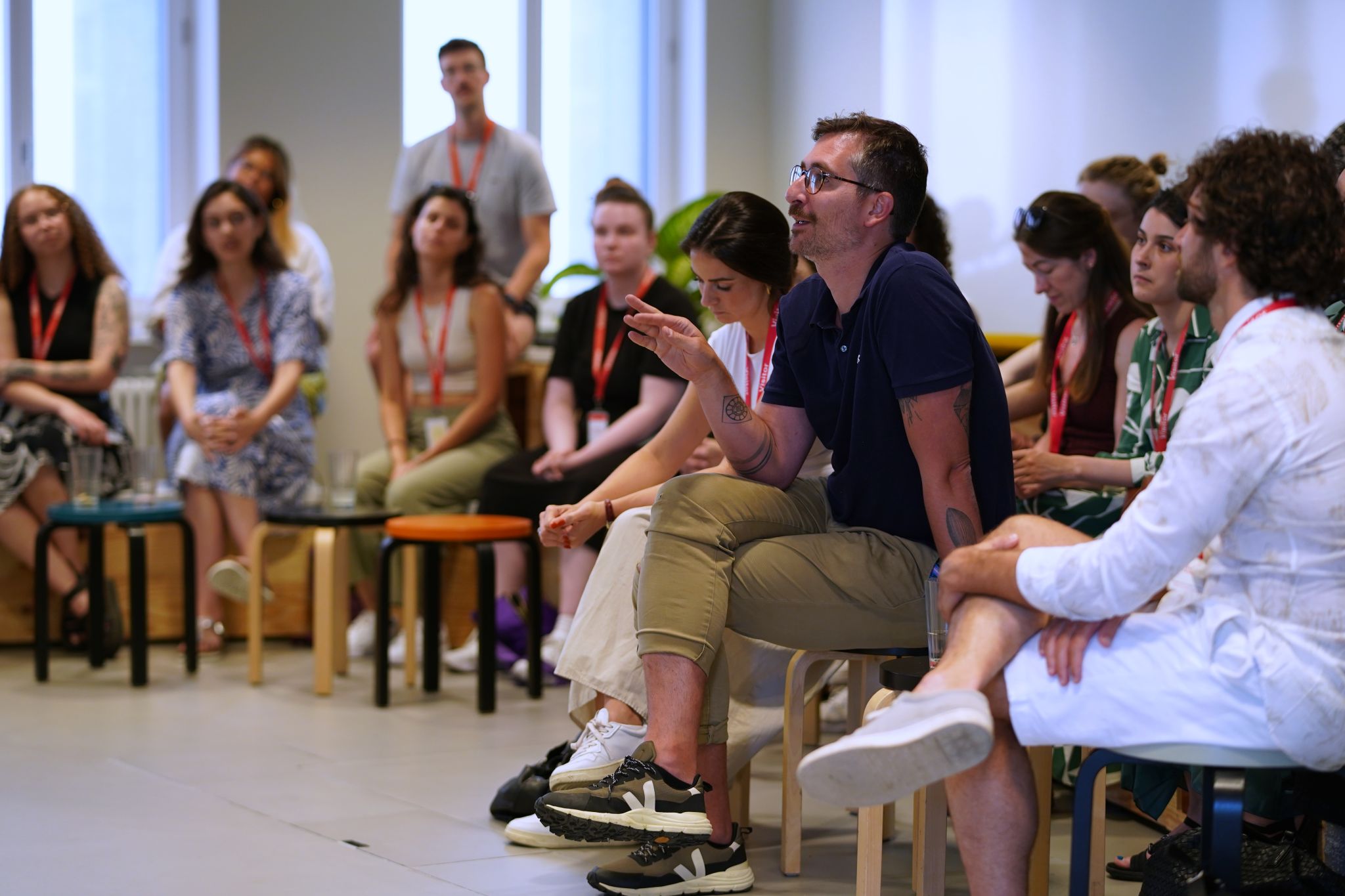
I opened by asking the room to raise a hand. Who has secretly Googled “Will AI take UX jobs?” Who thinks “cool, but it still needs my touch”? Fear, curiosity and a healthy dose of scepticism: a good place to start.
Is AI delivering what the hype promised?
Scroll LinkedIn for five minutes and everything is game-changing and ten times better than your whole team. The data tell a quieter story. McKinsey found that only 1% of leaders call their companies mature in AI deployment. S&P Global Market Intelligence found that 42% of companies abandoned most of their AI initiatives in 2025, up from 17% the year before, and that the average organisation scrapped 46% of its proofs of concept before they reached production.
Every revolution looks magical until you have to integrate it with Jira.
What is the real risk?
AI moves fast, and complexity can turn into chaos. Stakeholders lose sight of the value of human expertise, and companies start to prioritise quantity over quality just to survive. The risk is capability without context: power without purpose. The results are easy to predict: wasted investment, AI features nobody understands, frustrated teams and damage to the business.
Speed without empathy is just motion. Real progress needs purpose.


What has to change in the way we work?
The Double Diamond got us invited to meetings, but a tidy sequence no longer describes how teams work. Today it is an open space with potentially fifty diamonds, full of loops that AI makes explode with possibilities. AI generates broad, fast and complex. The human job is to go deep, sharp and strategic.
That asks for a different mindset. The old one says: I do everything from scratch. The new one says: I guide the system, I ask better questions, I shape the outcomes. From operators to conductors.
How do you use AI without being led by it?
By microdosing: AI where it gives real leverage, and never as an oracle.
Discovery. AI summarises, clusters and drafts. It will not ask the right questions or catch human nuance.
Definition and creation. A creative starter for ideas and prototypes. Drop its output into a regulated B2B flow and it falls apart.
Execution and refinement. It writes and reviews code and gathers feedback at scale. It cannot defend user trust or take responsibility.
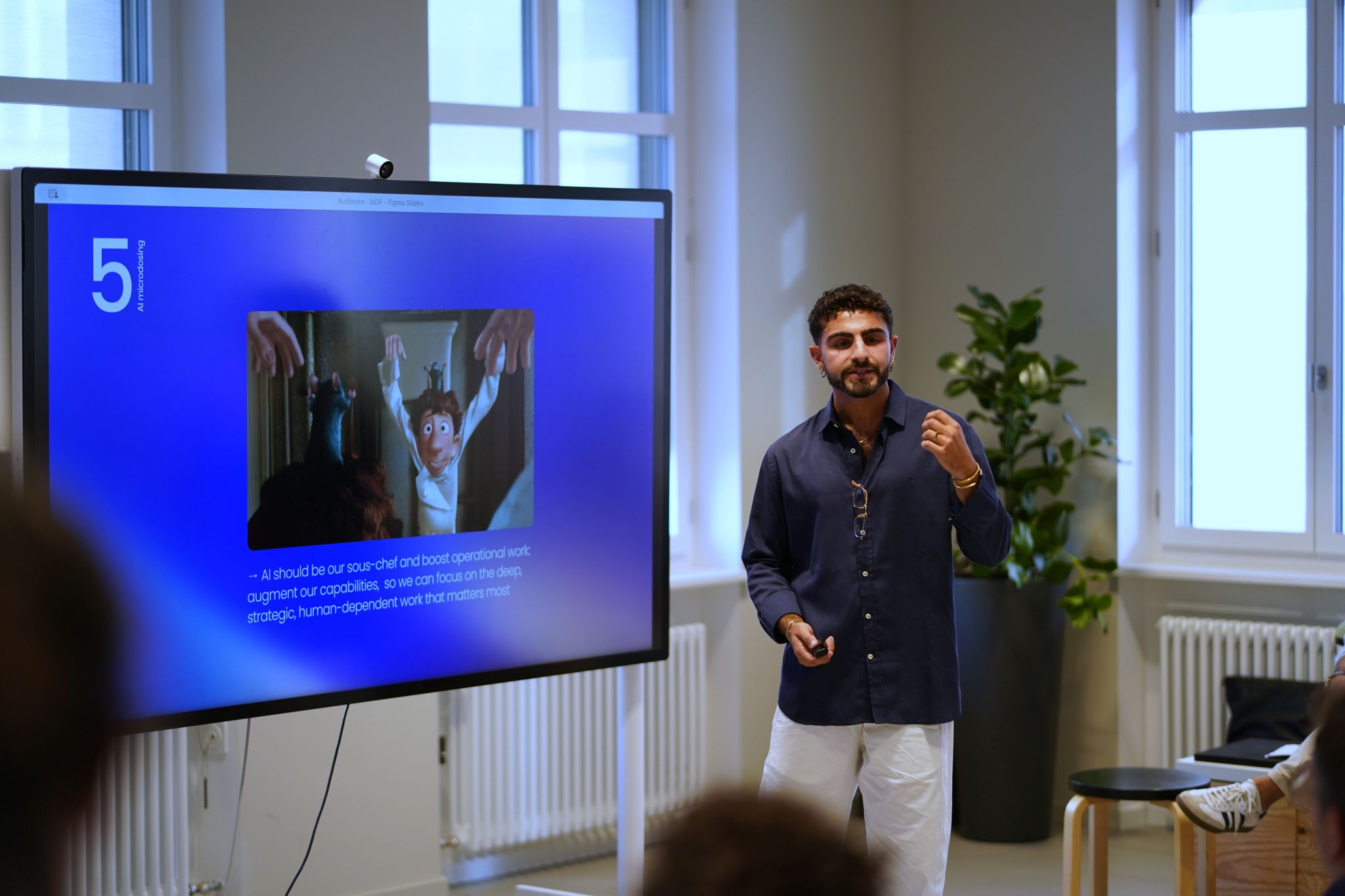
The kitchen is the image I keep coming back to. AI is the sous-chef: it preps, it chops, and occasionally it burns something. We are the ones with the taste, deciding what goes on the menu.
The final human call
As designers, as team leaders, as managers, as professionals of any kind, keep this in mind. Let’s not adopt AI blindly. Let’s not compromise quality for quantity. And let’s not encourage technical teams to build solutions without the input of those who understand how users behave.
Adapt, don’t fear. Lead, don’t follow. Break the diamond. Iterate the prompt. Orchestrate the AIs. Shape what’s next.